Social obligations under French law according to company workforce size
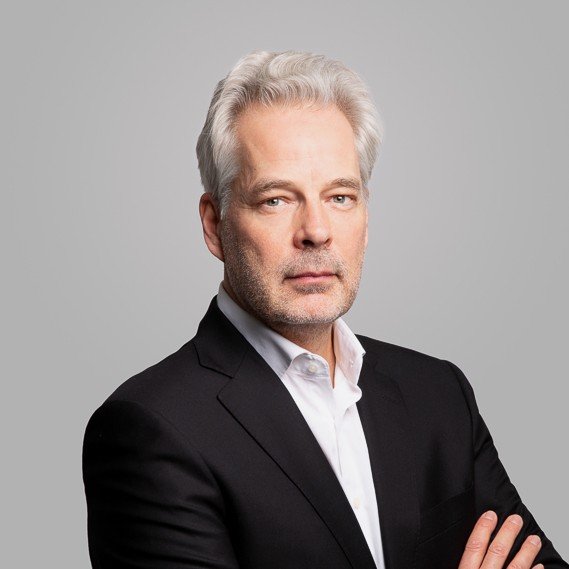
Michael Skaarup
France
by Michael Skaarup
French labour law imposes a set of obligations on employers according to the size of the company’s workforce. These workforce thresholds play a central role in human resources management, the organisation of social dialogue, and the employer’s administrative and financial obligations. Crossing a threshold may lead to new legal obligations – sometimes significant – in terms of employee representation, social contributions, or collective bargaining. A company’s workforce corresponds to the number of employees calculated according to the rules set out in the French Labour Code and the French Social Security Code. Some employees are counted in full, others only partially, and certain categories may be excluded from the calculation.
Social obligations according to the main workforce thresholds
Companies with fewer than 11 employeesCompanies with under 11 employees benefit from a relatively simplified social regime. The main obligations include compliance with general labour law requirements. In particular, the employer must establish written and compliant employment contracts, comply with work time regulations, ensure employees’ health and safety, display certain mandatory information, and implement the single occupational risk assessment document.The company must submit social declarations through the Déclaration Sociale Nominative (DSN) – the Mandatory Electronic Social Declaration – and pay social security contributions to the relevant authorities.The employer must also contribute to training funding at a specific rate.Every two years, each employee must benefit from a professional interview dedicated to their career development prospects.
Companies with at least 11 employeesReaching 11 employees constitutes an important milestone with the implementation of the Social and Economic Committee (CSE). Once a company has employed at least 11 employees for 12 consecutive months, the employer must organise CSE elections. The CSE is responsible in particular for presenting individual and collective employee claims, promoting health, safety, and working conditions, and facilitating dialogue between employees and management.
Companies with at least 20 employeesCompanies with at least 20 employees are subject to several additional obligations, notably the obligation to employ workers with disabilities. Failing this, the company must pay a financial contribution. The employer must also update the single occupational risk assessment document every year.
Companies with at least 50 employees The 50-employee threshold is the most significant under French labour law and entails major additional obligations. These include expanded powers for the CSE, such as mandatory recurring consultations, access to economic information, the possibility of appointing experts, and management of social and cultural activities, mandatory periodic collective negotiations (particularly regarding salaries), professional equality, quality of life and working conditions, and implementation of an economic, social, and environmental database accessible to employee representatives.Profit-sharing schemes become mandatory once the company reaches this threshold and also introduction of internal rules and regulations.
Additional thresholds at 250 employees and more
There are additional thresholds for employers at 250 employees, then 300 employees, and even 1,000 employees, with obligations extending to the group level, potentially within other EU countries. Mastering these obligations is essential for employers from both a legal and strategic perspective. Regular monitoring of social law developments, and appropriate support, help secure the company’s growth, prepare for effective social dialogue, and ensure compliance with employees’ rights.
XLNC member firm ELTEA AvocatsParis, FranceT: +33 1 87 89 61 75
Legal
Michael Skaarup is a founding partner and actual managing partner at Eltea Avocats law firm. He specializes in labour and corporate laws, with focus on implementation and growth of business on the French marked, M&A and restructuring. He advises Danish and Scandinavian subsidiaries, European groups and international companies on their projects in France.Contact Michael.
Eltea Avocats, Paris based, is a full-service law firm advising on M&A, corporate matters, tax, labour law, commercial lease agreement, real estate, restructuring, IP, IT – personal data, distribution, transport, debt recovery, commercial and labour litigation across France territory. Eltea Avocats is serving all companies and personal investors from all over the world.